
ICC Berlin

ICC Berlin
ICC Berlin
House within a House, on a Grand Scale
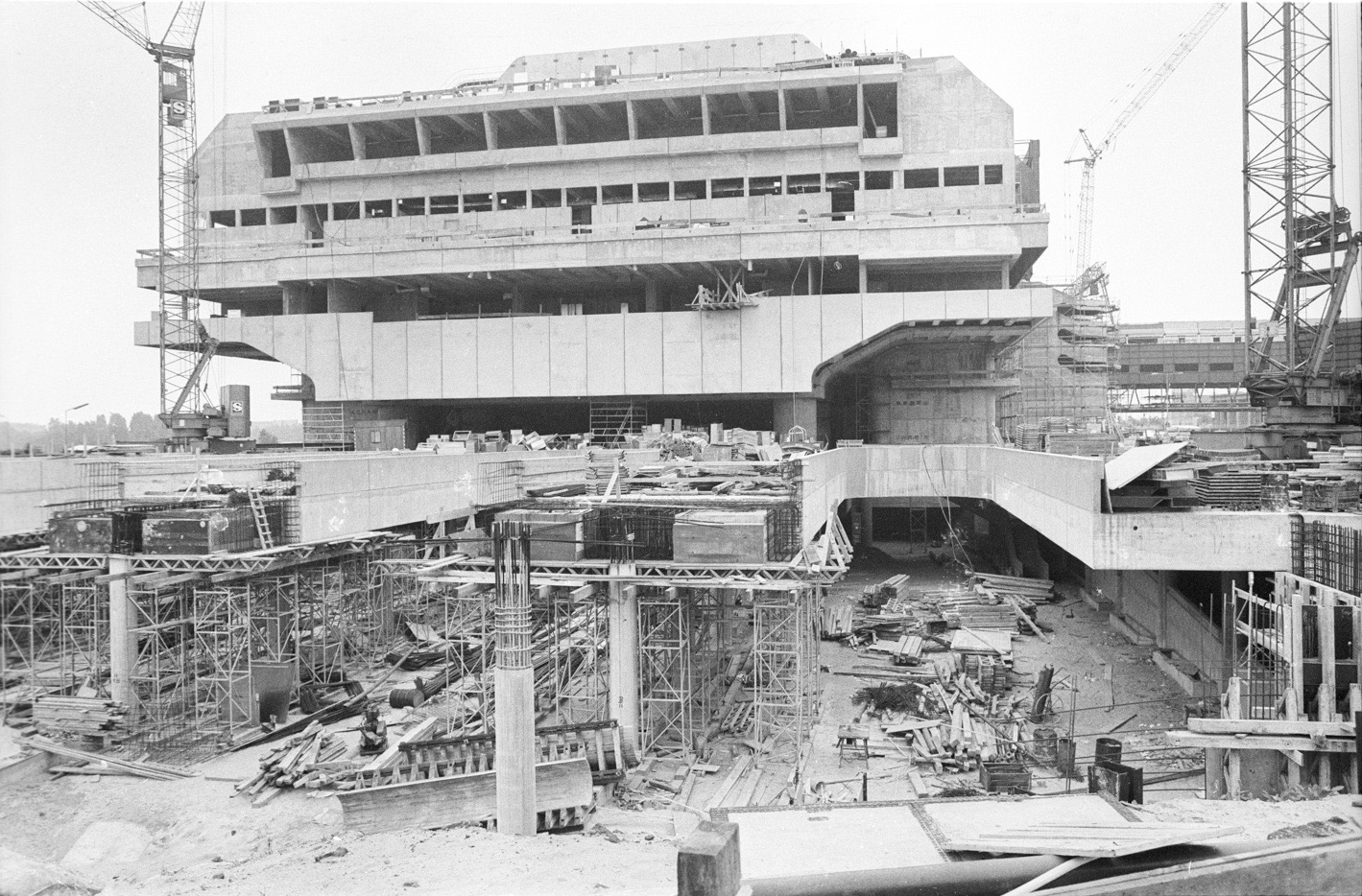
Reinforced concrete cross wall in the shell construction phase, 1976. Photo: STRABAG
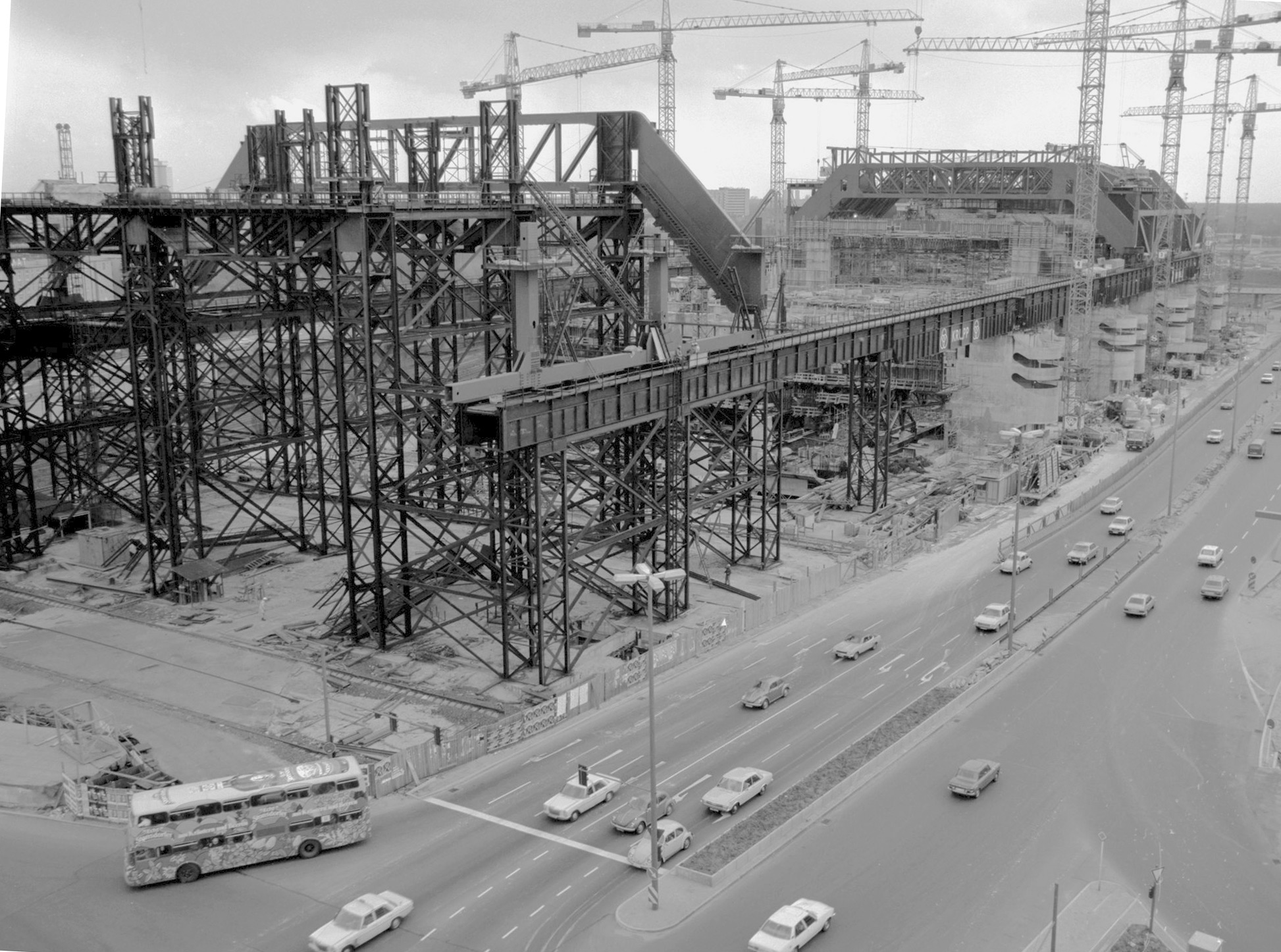
Sliding the roof trusses into place, 1977. Photo: Landesarchiv Berlin
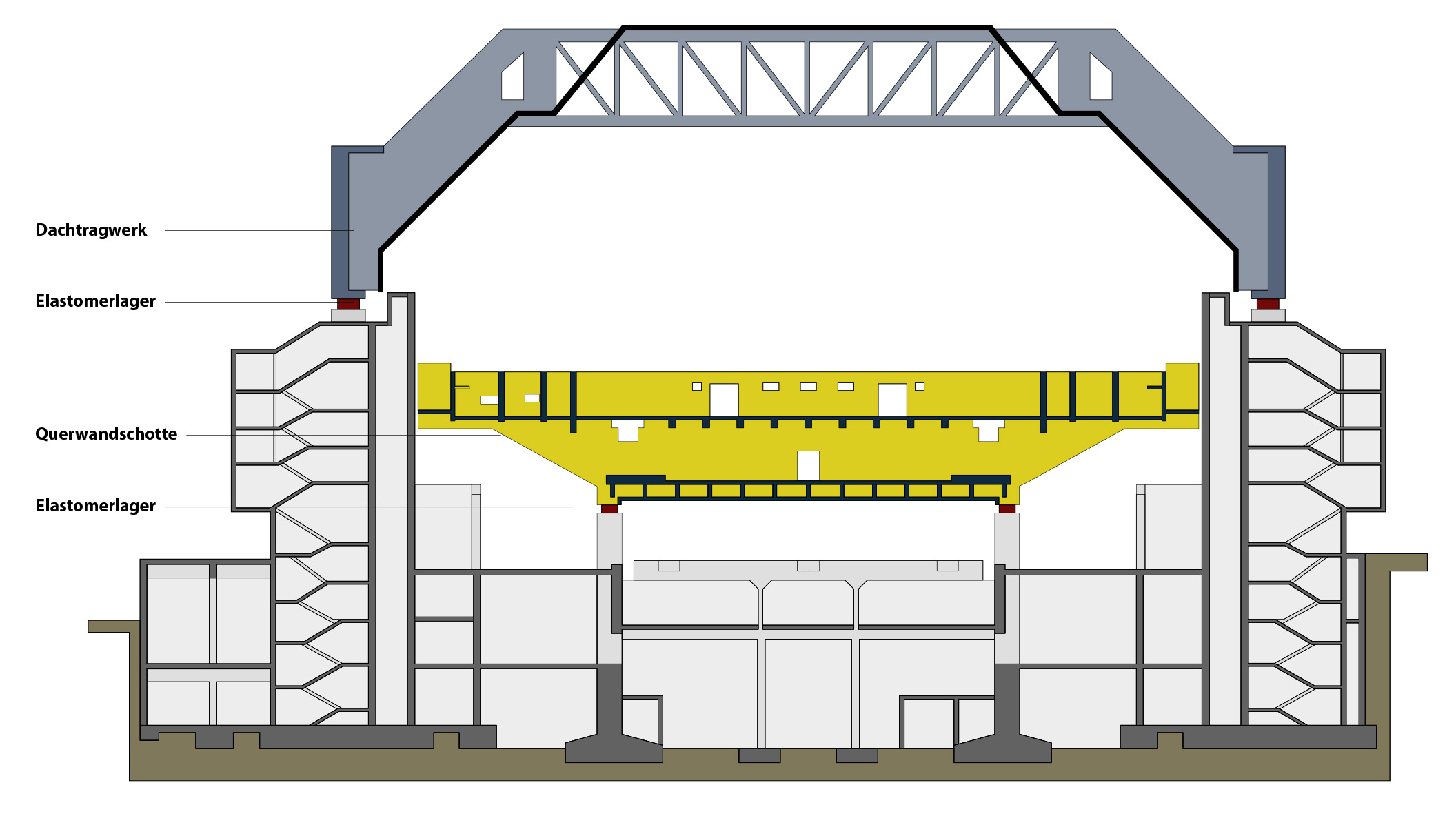
Configuration of the house-within-a-house structure. Drawing: Mark Gielen, BTU Cottbus-Senftenberg
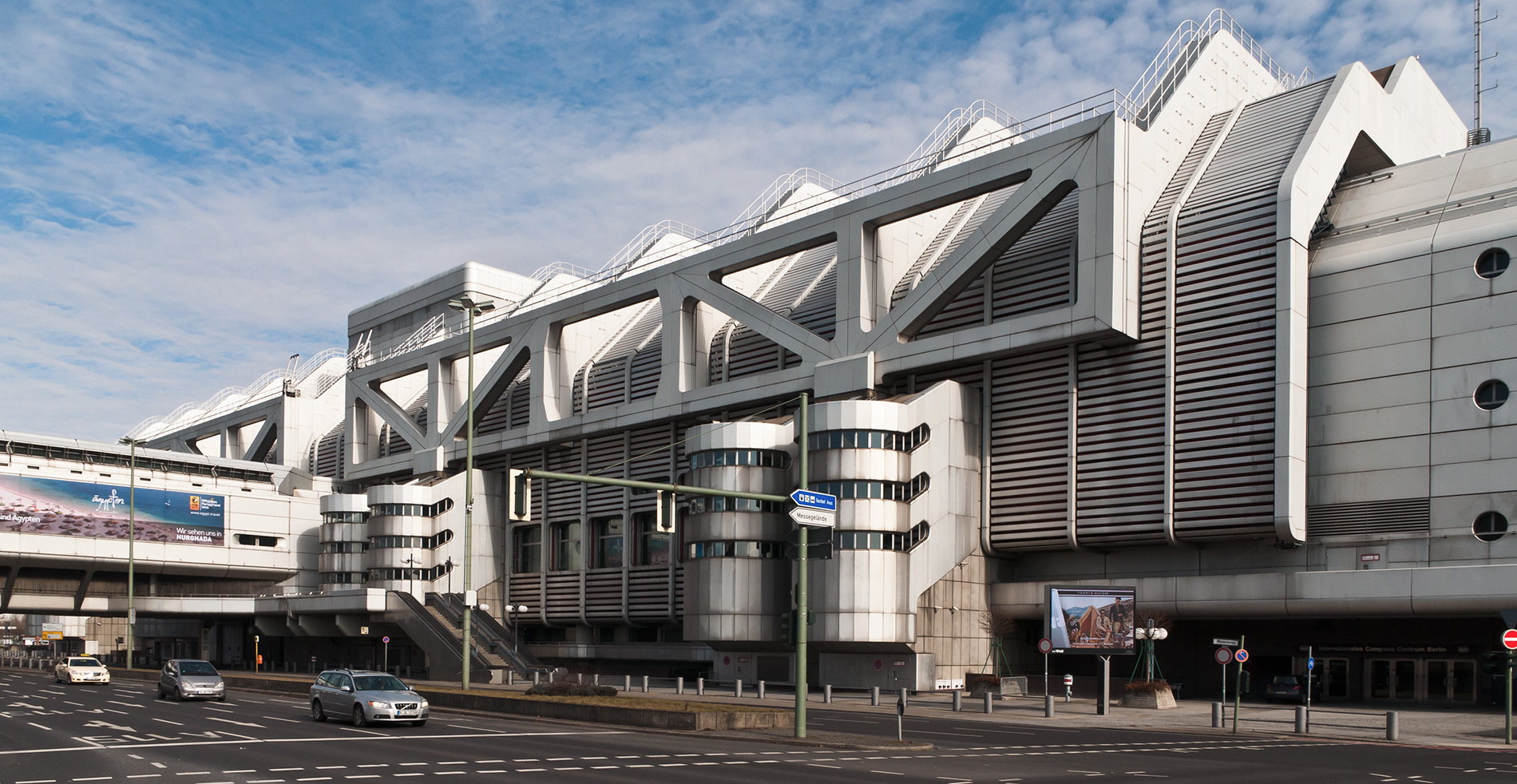
View from Messedamm, 2012. Landesdenkmalamt Berlin, photo: Wolfgang Bittner
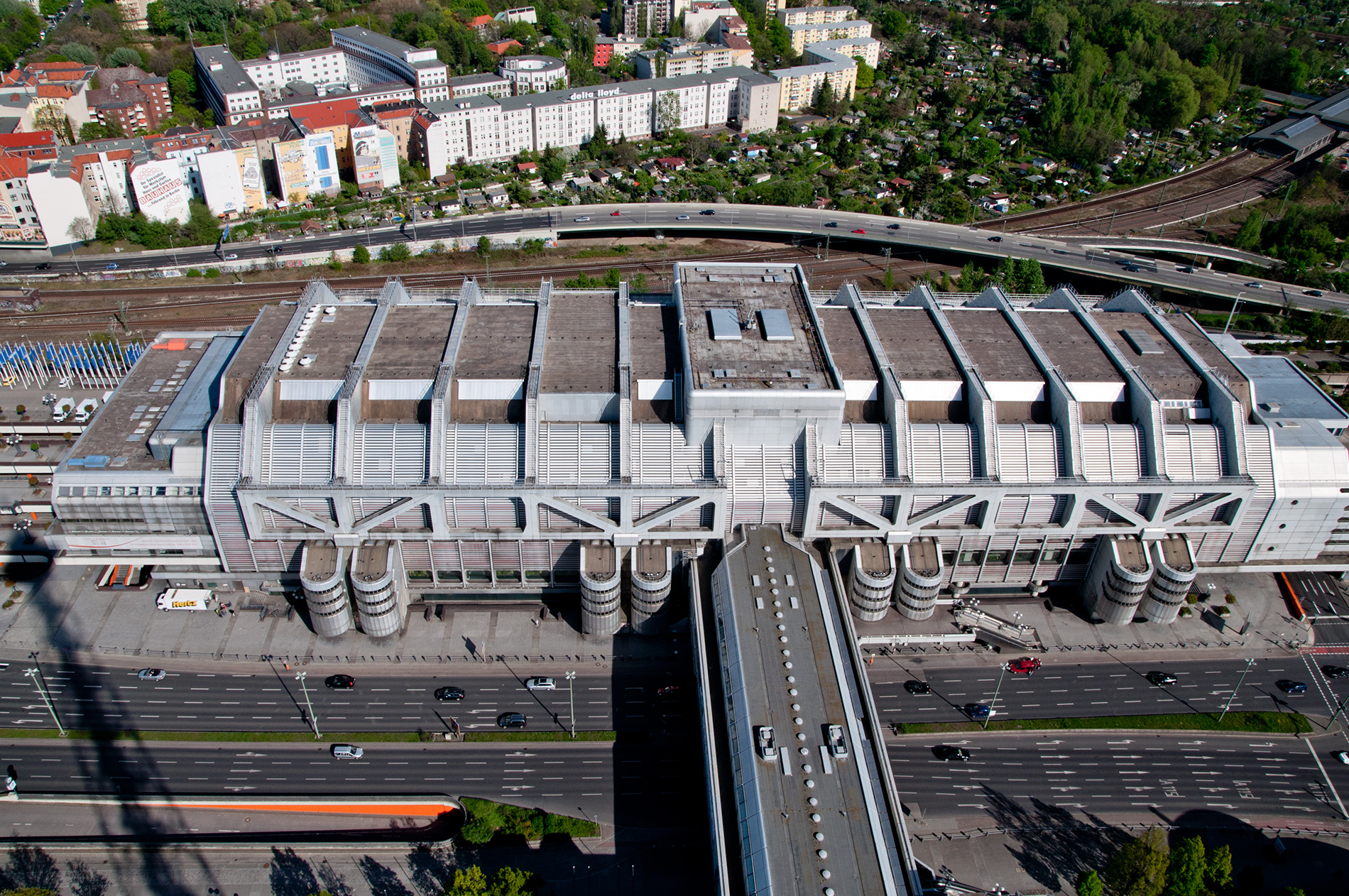
Aerial view, 2012. Landesdenkmalamt Berlin, photo: Wolfgang Bittner
Built at the end of the 1970s, the Internationales Congress Centrum (ICC) Berlin can be read as the epitome of late architectural modernism in all its contradictions. Admired at the time for its enormous dimensions, its sophisticated structure, its technical equipment and, not least, its spectacular construction process, the building has today become a refurbishment case that can hardly be financed, owing to the ubiquitous use of asbestos-containing cladding, since recognized as disastrous. Notwithstanding this, the successful synthesis of architecture and engineering made the ICC a unique urban sculpture in what was then West Berlin, and it is still regarded as one of the city’s central landmarks.
The Building
Located on the northeastern edge of the exhibition grounds and connected to them by a three-story bridge structure, the ICC, measuring 320 m in length, 80 m in width and 40 m in height, was at the time one of the largest congress buildings in the world. Its position at the intersection of the urban motorway and the AVUS led to the key planning requirement of acoustically decoupling the entire interior from both the subsoil and the outer envelope. The answer was a house-within-a-house concept
Construction
The “inner house” is a complex reinforced concrete structure with prestressed transverse cross walls almost 60 m long as its main girders. 14 m high and 2.20 m wide, they collect all loads and transfer them at the quarter points into the substructure; elastomeric bearings ensure acoustic and vibration isolation. The “outer house” of the roof and external walls is executed as a steel structure. Twelve transverse frames, each spanning 60 m, terminate on two massive longitudinal lattice girders, which are supported by the eight stair cores placed in front of the building.
The construction process was no less spectacular than the structure itself. A specially designed traveling formwork was used for the gigantic cross walls, and while the shell of the interior was still being built, the pre-assembled roof trusses were already being slid into their final position on a temporary skid track.
Future
With construction costs of almost one billion Deutschmarks, the ICC was at the time the most expensive building ever erected in Germany, and over the following decades it developed into one of the most sought-after congress venues worldwide. Owing to its high operating costs and the refurbishment costs it faced, it was closed in 2014. It has been a listed monument since 2019; its future is uncertain.
Key Facts
- Location: Messedamm 11, 14055 Berlin-Westend
- Construction: 1975–1979
- Structural design: Manfred F. Manleitner, Horst Spandow, Hans Joachim StegemannIngenieurbüro Gerhard Bartels
- Overall design: Ralf Schüler, Ursulina Schüler-Witte
- Heritage status: Hangar 5 is part of the “Flugplatz Cottbus-Nord” ensemble, listed since 2000; the listing of Hangar 6 was lifted in 2003.
- Construction: General contractor: Neue Heimat Städtebau; solid construction: Strabag (lead) et al.; steel construction: Krupp Industrie- und Stahlbau (lead) and Peiner Stahlbau
- Heritage status: Entered in the list of monuments of the State of Berlin in 2019
Further Reading
- AIV Berlin (ed.): Berlin und seine Bauten, Teil IX: Industriebauten, Bürohäuser. Berlin 1971, pp. 53 f.;
- Gerhard Bartels: “ICC Berlin, Konstruktion und Technik.” In: Neue Heimat, Monatshefte für neuzeitlichen Wohnungsbau (1979), no. 3, pp. 68 f.;
- Ursulina Schüler-Witte: Ralf Schüler und Ursulina Schüler-Witte. Eine werkorientierte Biographie der Architekten des ICC. Berlin 2015, pp. 56–127
- Werner Lorenz / Roland May / Hubert Staroste: Ingenieurbauführer Berlin. Petersberg 2020, pp. 136 f.
