
Sternbrücke Hamburg
Sternbrücke Hamburg
Sternbrücke Hamburg
Erected High Up in the Air
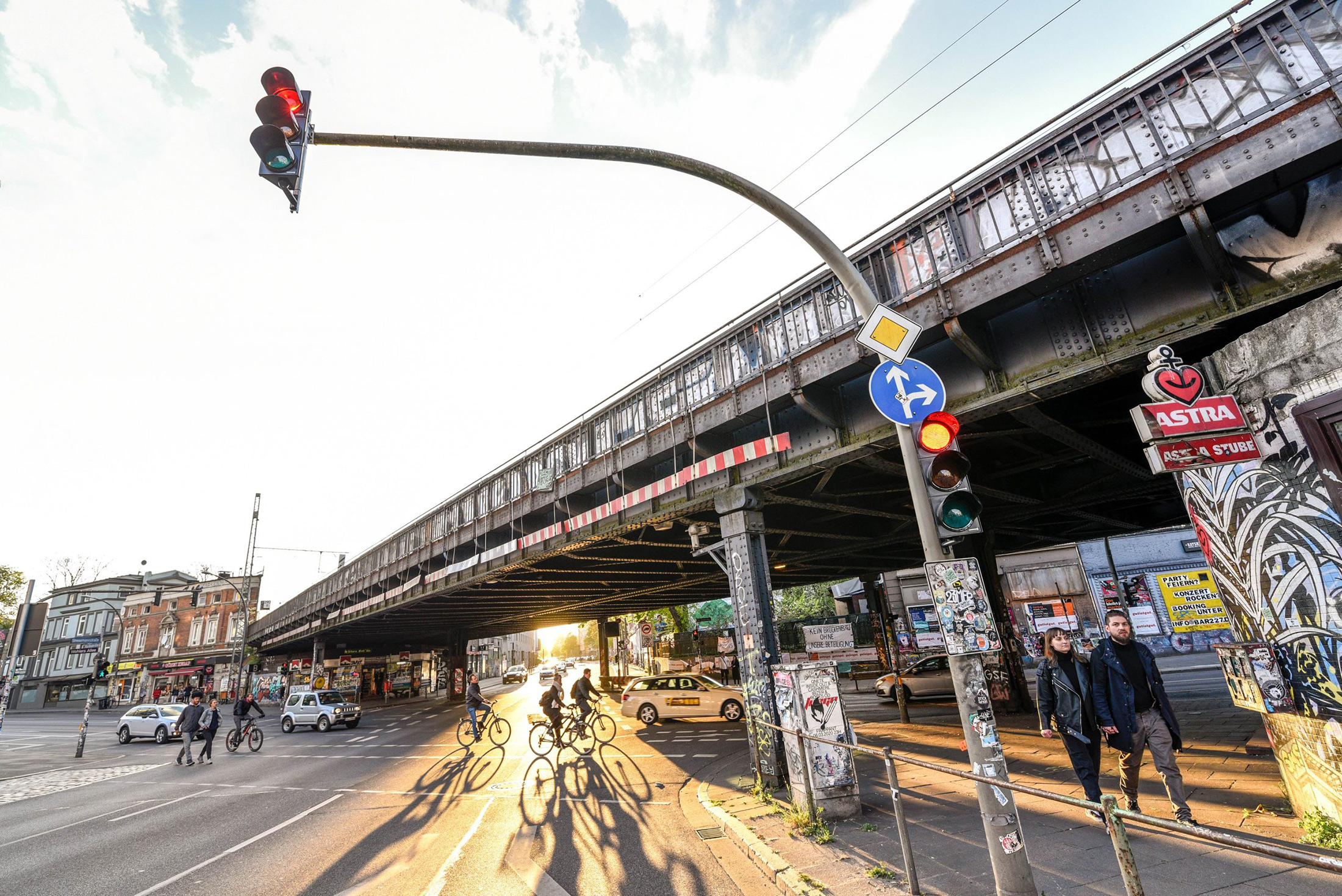
View of the Sternbrücke. Photo: Stephan Pflug, Initiative Sternbrücke.
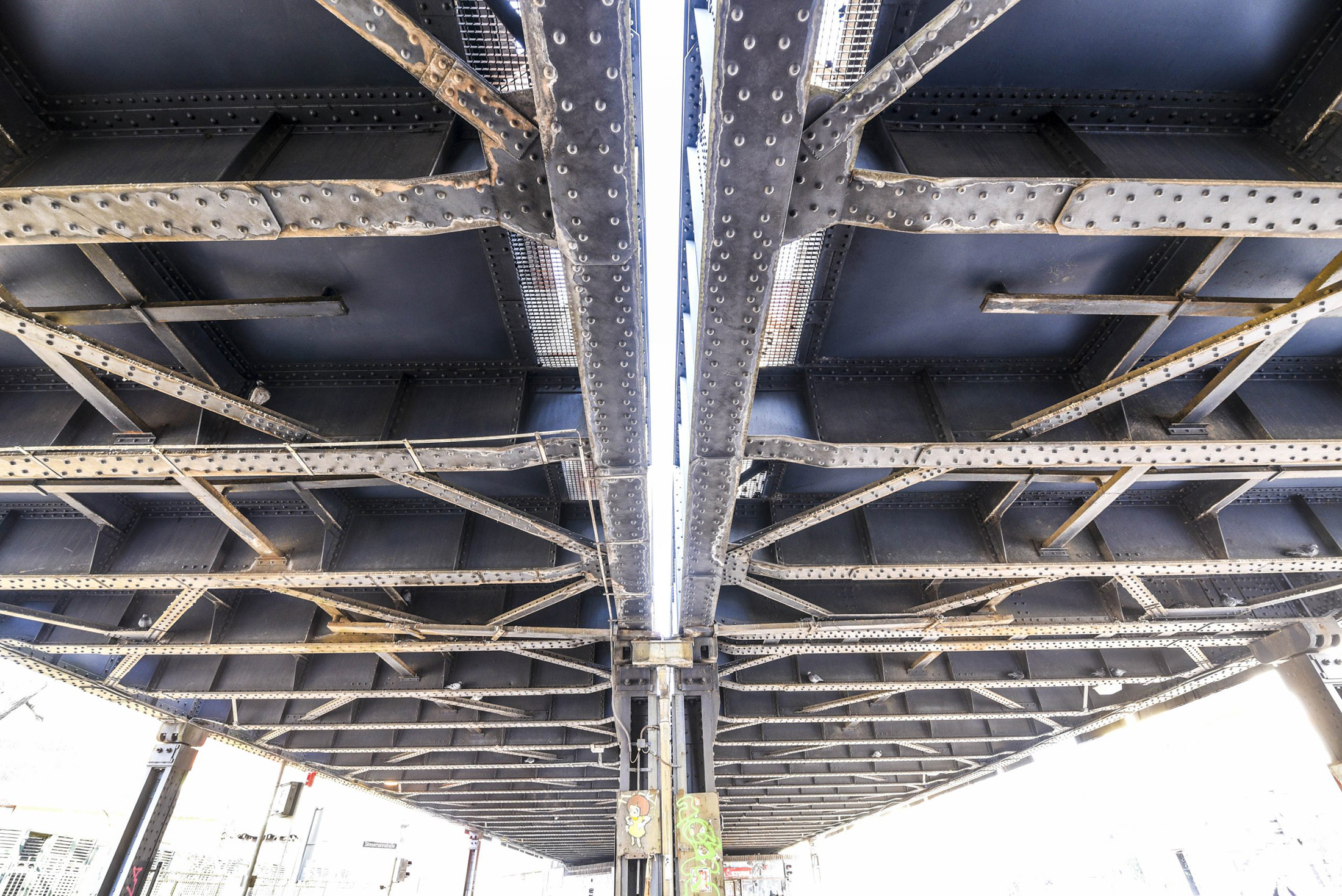
View of the underside of the Sternbrücke. Photo: Stephan Pflug, Initiative Sternbrücke
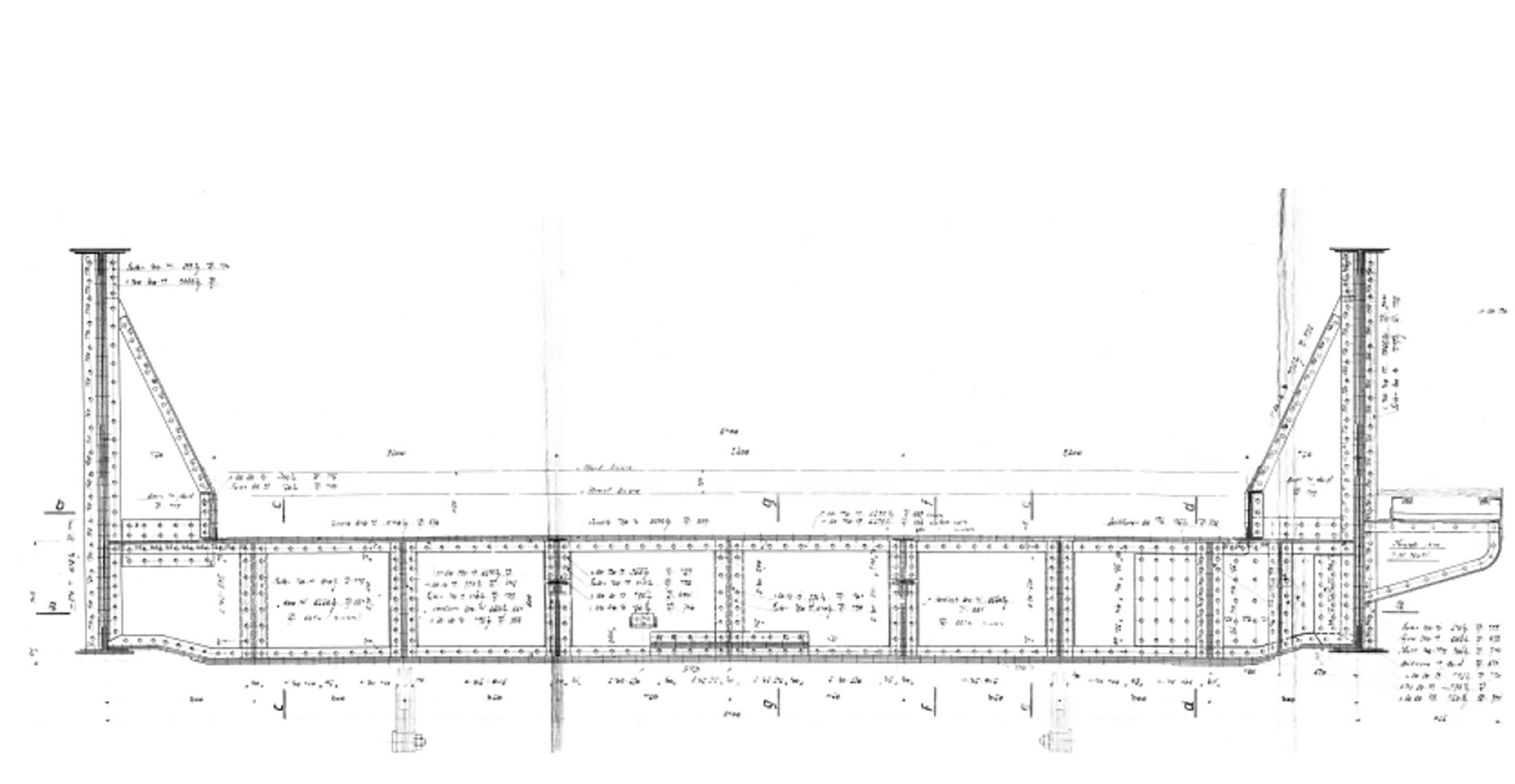
Cross-section of the superstructure.
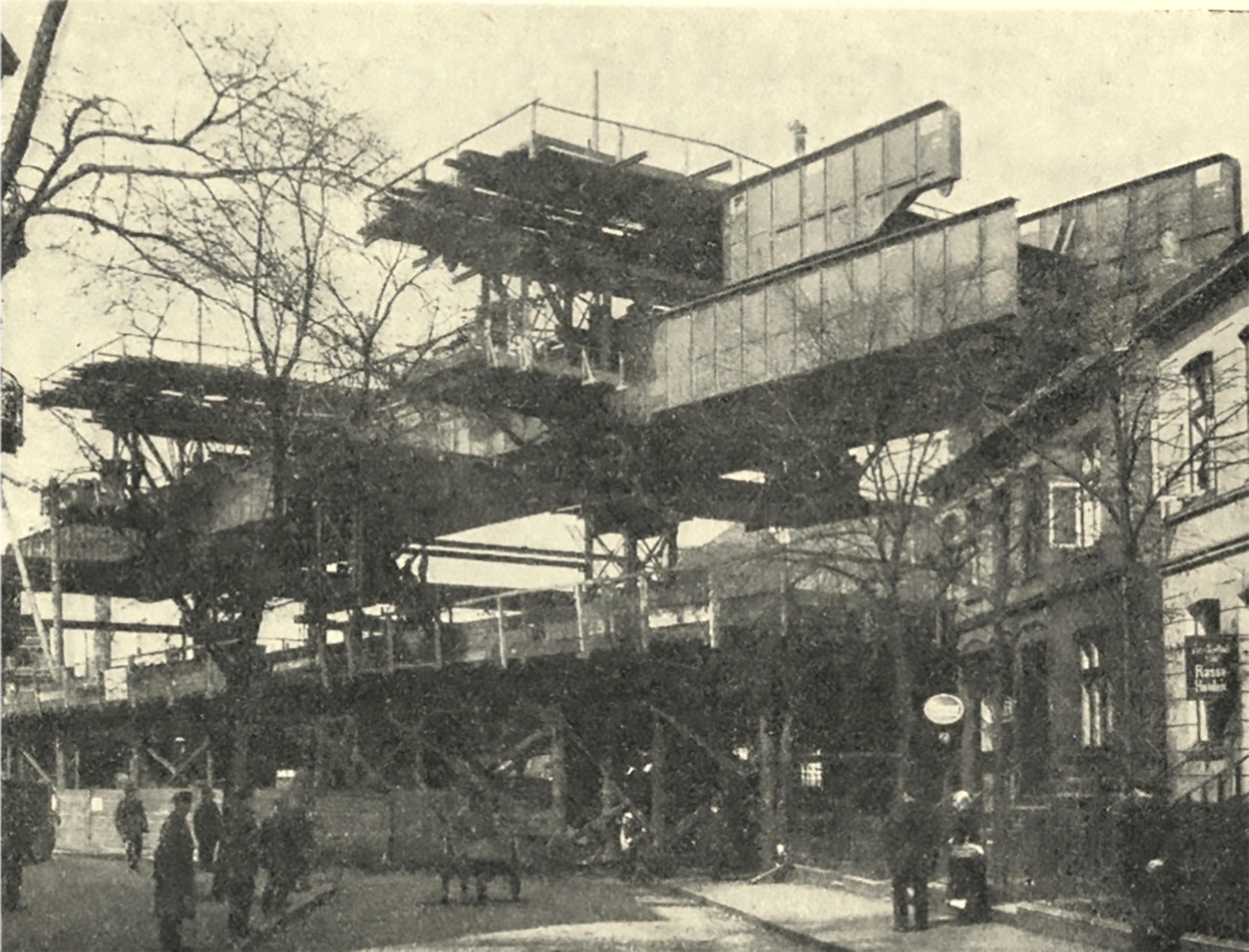
The Sternbrücke during erection. Die Bautechnik 5 (1927), no. 1, p. 3
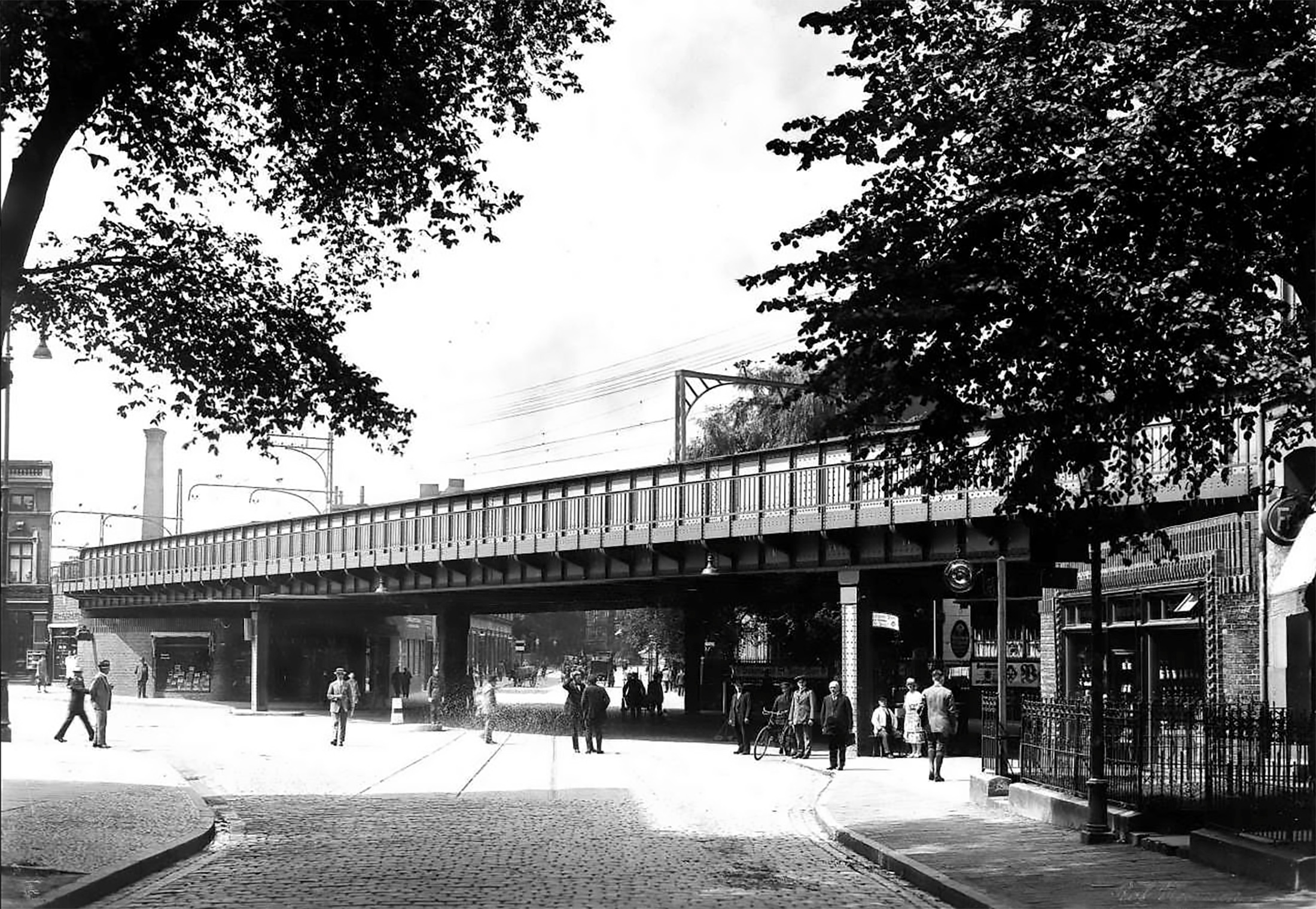
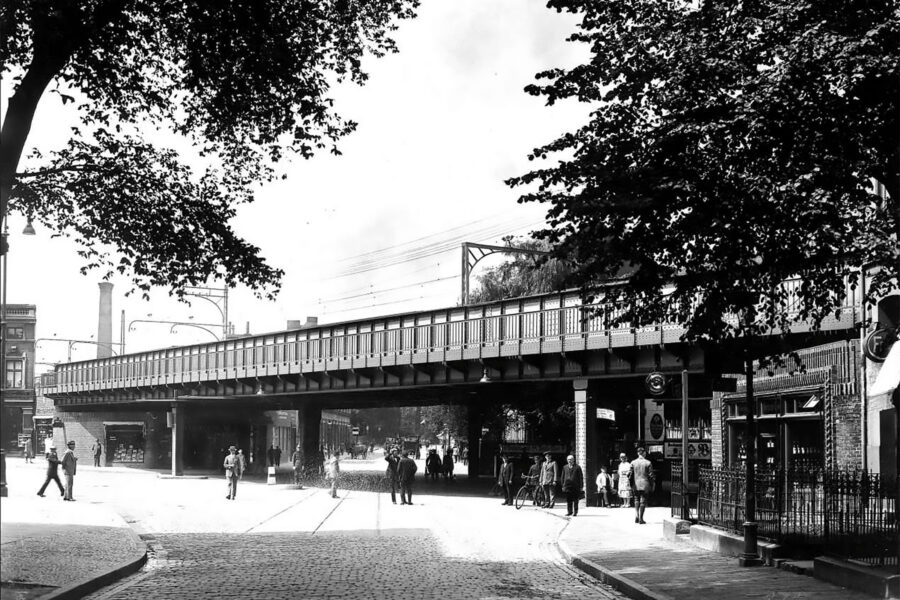
The Sternbrücke shortly after its completion in 1926. Photo: Hamburg-Motiv.de
Built in 1925/26, the Sternbrücke (Star Bridge) in Hamburg-Altona is a remarkable example of high-modern engineering. Its difficult urban setting posed very particular challenges during construction. The bridge is moreover an early example of the use of the higher-strength steel St 48 and vividly demonstrates the efforts of the Reichsbahn (German national railway) during the Weimar years to establish more economical methods of construction.
The Building
The Sternbrücke replaced an earlier structure of 1893 spanning a junction of several important traffic routes known as the “Stern” (star). On its opening, the replacement was celebrated as a “brilliant achievement of German engineering,” not least because its construction had caused only very minor traffic disruption. To achieve this, the bridge superstructures had been assembled directly above and next to the old structure and lifted or slid into place during very short closures. Also noteworthy is the high-quality and elaborate design of the abutments, vaults and casemates, which drew on local traditions of brick architecture. Combined with the rigorous elegance of the steel superstructure, the result is an impressive dialogue between architecture and engineering.
Construction
The form of the steel members is strictly derived from the material and the structure. Two riveted plate girders of St 48, each only 2.80 m deep and up to 75 m long, form the core elements of each of the two double-track superstructures. They rest on a total of six steel columns in the street space as well as on two abutments and the adjoining casemates. The three-span girder solution with short end spans, typical of the period, made it necessary to secure the end bearings against uplift by means of counterweights.
Future
In February 2024, the Federal Railway Authority (Eisenbahn-Bundesamt) approved the replacement structure, a column-free tied-arch bridge 108 m long with a crown height of approx. 26 m. Shortly after the plans became known, the Initiative Sternbrücke had been founded. It campaigned for the preservation of the listed Sternbrücke and for intensive public participation in the planning. In July 2026, the old bridge was dismantled; since 31 August 2026, trains have been running over the new structure. (CJS)
Key Facts
- Location: Junction of Stresemannstraße / Max-Brauer-Allee, 22769 Hamburg-Altona
- Construction: 1925/26
- Structural design: Reichsbahndirektion Altona (Otto Blunck and Hans Kilian)
- Overall design: Reichsbahndirektion Altona
- Contractor: Louis Eilers, Fabrik für Eisen-, Hoch-, und Brückenbau, Hannover-Herrenhausen
- Heritage status: Entered in the Hamburg list of monuments in 2015 (cultural monument entry 43768)
Further Reading
- Otto Blunck: “Umbau der Sternbrücke in Altona.” In: Stahl und Eisen 47 (1927), no. 6, p. 235
- Sven Bardua: Brückenmetropole Hamburg. Baukunst – Technik – Geschichte bis 1945 (Schriftenreihe des Hamburgischen Architekturarchivs; 25). Hamburg 2009, pp. 20 f., 157
- Werner Lorenz: “Von der Notwendigkeit des Weiterbauens.” In: Eva Maria Froschauer et al. (eds.): Vom Wert des Weiterbauens (Kulturelle und technische Werte historischer Bauten; 4). Basel 2020, pp. 117–132
More Information
“Sternstunde null”: a film about the “Sternbrücke” in Hamburg-Altona (YouTube video, length: 44:11 minutes).
