
Former Machine Hall in Dessau
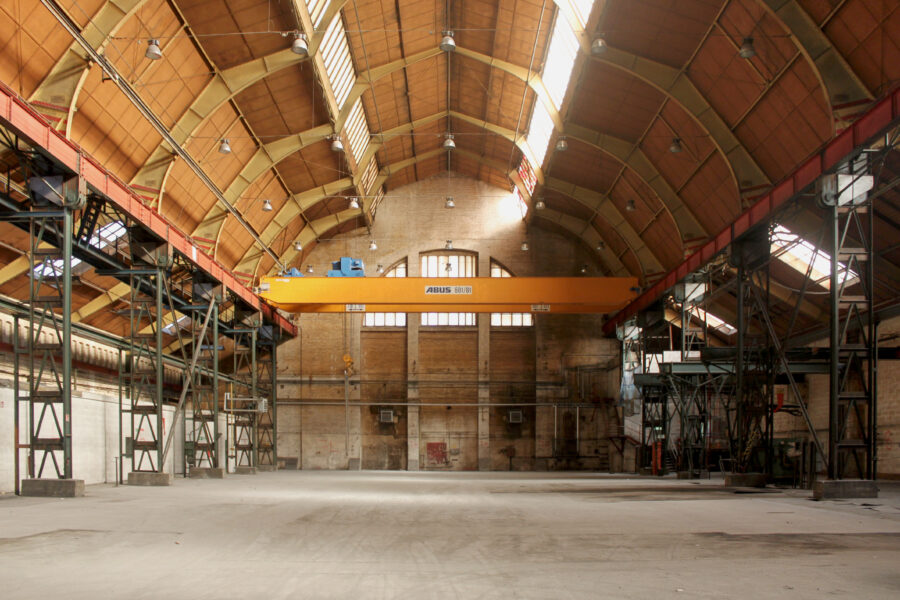
Machine Hall in Dessau
Former Machine Hall in Dessau
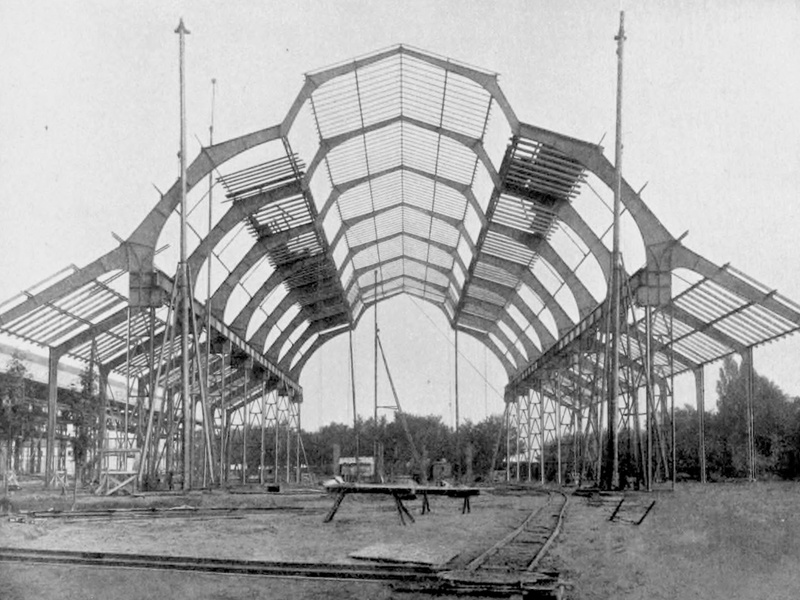
Construction site of the Machine Hall in Brussels, photographed in autumn 1909.
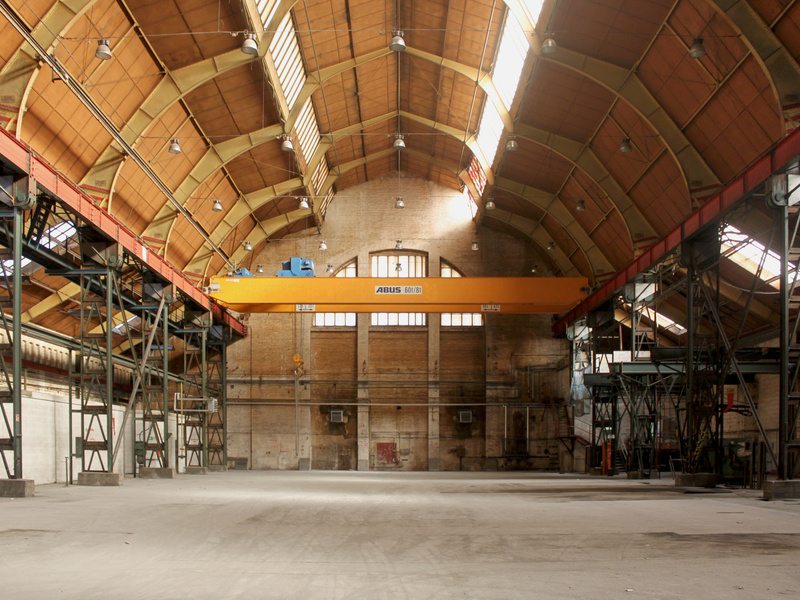
Interior of the former loading hall of G. Polysius, Dessau, photographed in 2023.
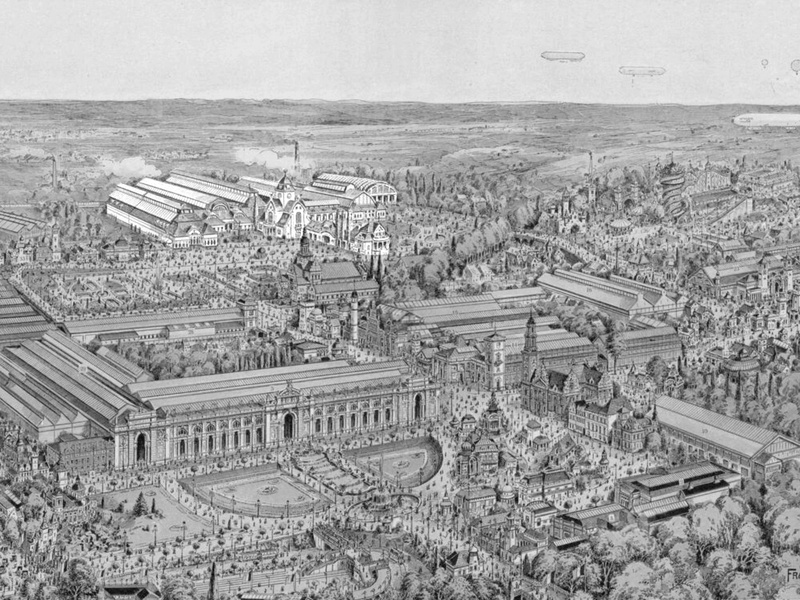
Bird’s-eye view of the Brussels World Exhibition grounds, 1910, by Franz Šedivý. In the background (highlighted): the German section.
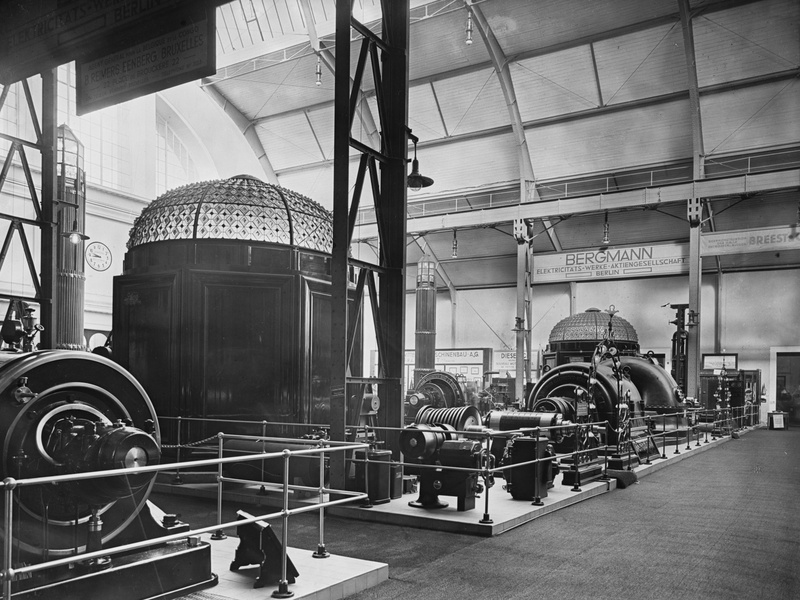
The Machine Hall at the 1910 Brussels World Exhibition, view of the crane runway.
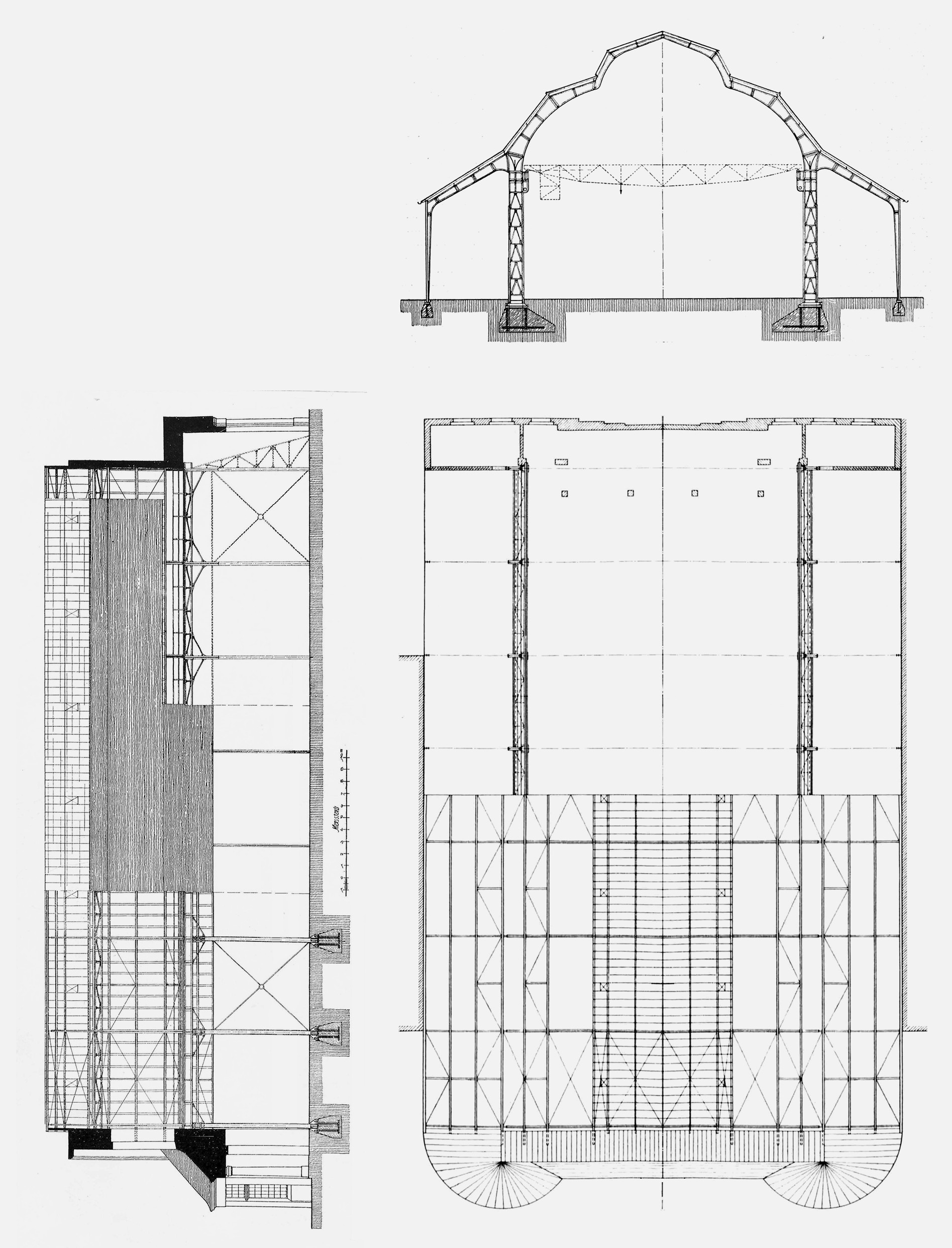
Plan and sections of the Machine Hall at the 1910 Brussels World Exhibition.
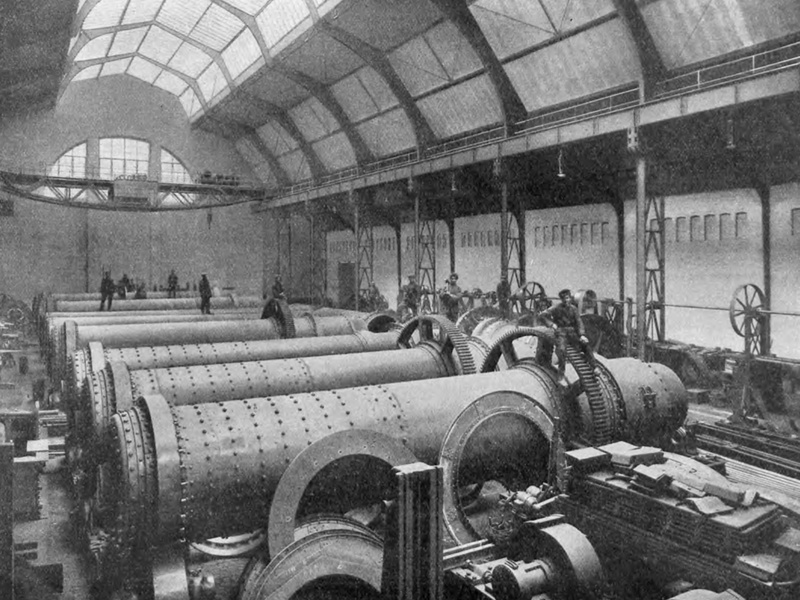
Interior of the loading hall of G. Polysius, Dessau, photographed around 1913.
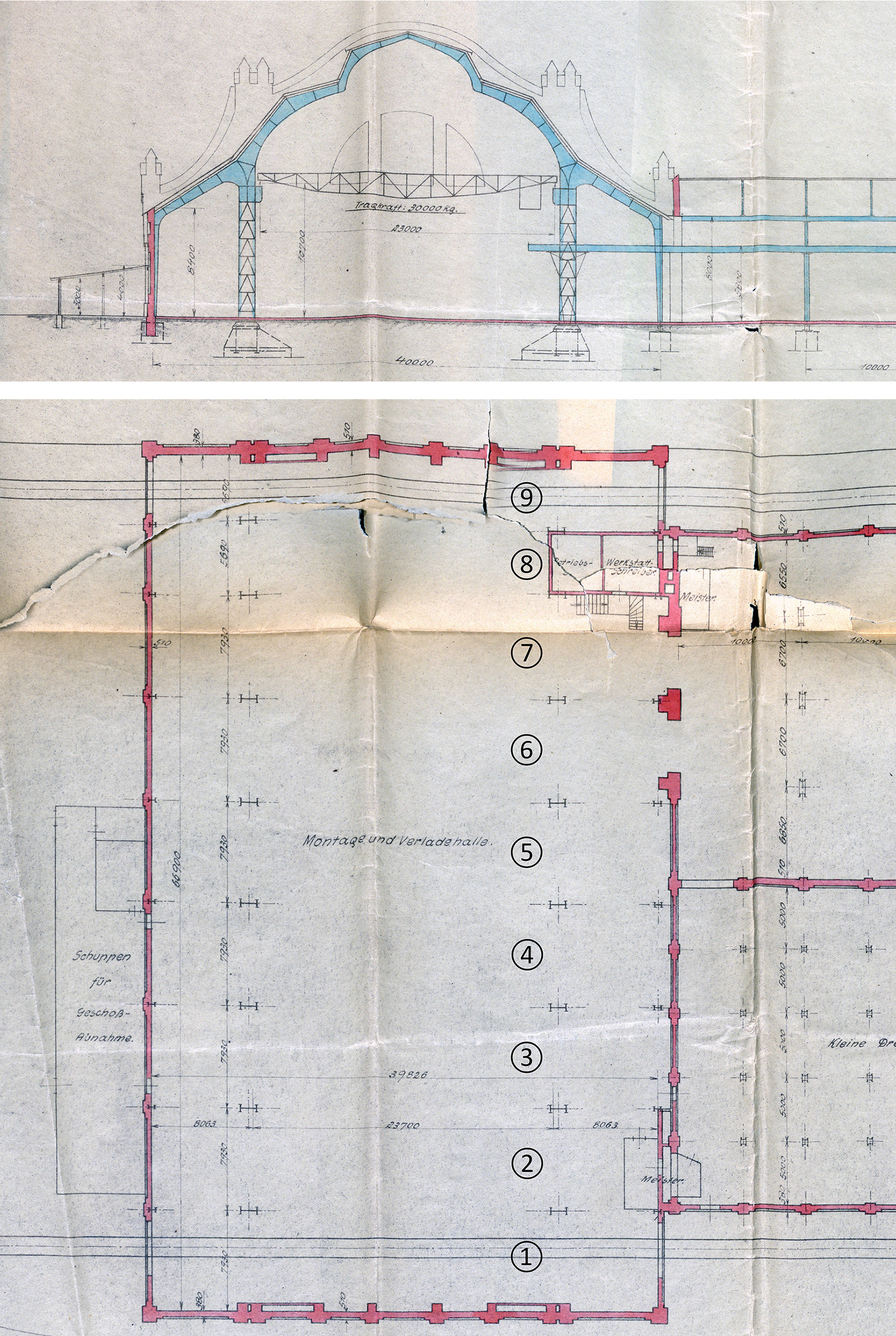
Building complex of the “Neues Werk” (New Works) of G. Polysius, with the assembly and loading hall on the left (detail), November 1918. The inserted numbers ① to ⑨ mark the truss bays.
Structure as an Architectural Element
The Kraftmaschinenhalle (Machine Hall) at the 1910 World Exhibition represented modern German industrial culture and, with its clearly articulated steel structure, became an influential model. At its present site in Dessau, it continues to impress as an outstanding example of the art of industrial building.
The Building
At the 1910 World Exhibition in Brussels, Germany presented itself in a separate group of buildings, designed largely by members of the Werkbund and brought together by Emanuel von Seidl into an overall composition. Both the exhibits and the interiors were intended to convey a new, “German” approach to the applied arts and industrial building. Peter Behrens acted as artistic adviser for three halls, among them the Machine Hall, in which power-generating machines and related apparatus were displayed.
Construction
In cross-section, the building, around 56 m long and 40 m wide, followed the type of the three-aisled assembly hall. Its defining features were eight unusually curved steel trusses, which in the longitudinal direction defined seven bays, each with a center-to-center spacing of 7.93 m. Committed to the “principle of closed construction,” the load-bearing structure consisted largely of solid-web members, in contrast to the lattice construction common at the time, which was often criticized as chaotic. Only the columns between the side aisles and the central nave, almost 24 m wide, were executed as lattice members. The reason was the wish for a statically determinate system with fixed-base interior columns and cantilever arms reaching out on both sides. The drawback of relatively wide columns, whose novel K-bracing appeared almost ornamental, was more than offset, as far as the effect of the interior was concerned, by the fact that visible tension cables could now be dispensed with: undisturbed, the prismatically faceted three-hinged arches of the fully glazed roof light above the central nave had a particularly striking effect.
In the Machine Hall, Behrens for the first time consistently celebrated the structure as an architectural element; at the same time, the building earned the cooperating firm Breest & Co., which had erected it largely at its own expense, a lasting reputation as an innovative steel construction company. After the World Exhibition closed, the firm relocated the much-admired building to Dessau, where, next to an existing locksmith’s workshop, it henceforth served the machine factory G. Polysius as a loading hall.
Future
At its new site, the interior initially remained largely unchanged; by incorporating newly built solid end façades into the load-bearing structure, however, two additional bays were gained. A first significant intervention in the spatial effect came in the 1920s, when large parts of the generous lantern glazing were removed. In the course of continuous industrial use, further original elements were gradually lost, and the original color scheme, based on the contrast between white surfaces and the blue-grey steel structure, was abandoned. Particularly drastic was the welding of wide steel plates onto the delicately designed bracket supports of the crane runway, probably when the overhead traveling crane was replaced. Despite all these losses, the building remains captivating today – as a memorial to the once-propagated union of art and technology and as an authentic example of an outstanding achievement of industrial architecture that has been in continuous use for 115 years.
Key Facts
Location: Brauereistraße 13A, 06847 Dessau-Roßlau
Construction: 1909/10; re-erected in Dessau 1910/11
Structural design and construction: Breest & Co., Berlin (chief engineer Richard Kottke)
Design: Peter Behrens; façades in Brussels by Emanuel von Seidl, in Dessau by Max Beuthner
Heritage status: Entered in the list of monuments of the State of Saxony-Anhalt under object no. 094 40206.
Further Reading
Roland May: “Die Kraftmaschinenhalle der Weltausstellung 1910 in Brüssel von Peter Behrens – ein Markstein der modernen Industriebaukunst.” In: Denkmalpflege in Sachsen-Anhalt 32 (2024), no. 1, pp. 21–37.
Axel Schuhmann: “Von Brüssel nach Dessau. Die Kraftmaschinenhalle von Peter Behrens als Werkhalle der Firma G. Polysius in Dessau.” In: Denkmalpflege in Sachsen-Anhalt 32 (2024), no. 1, pp.
