
Former Motorway Overpass “Weg Hesseler” in Beckum
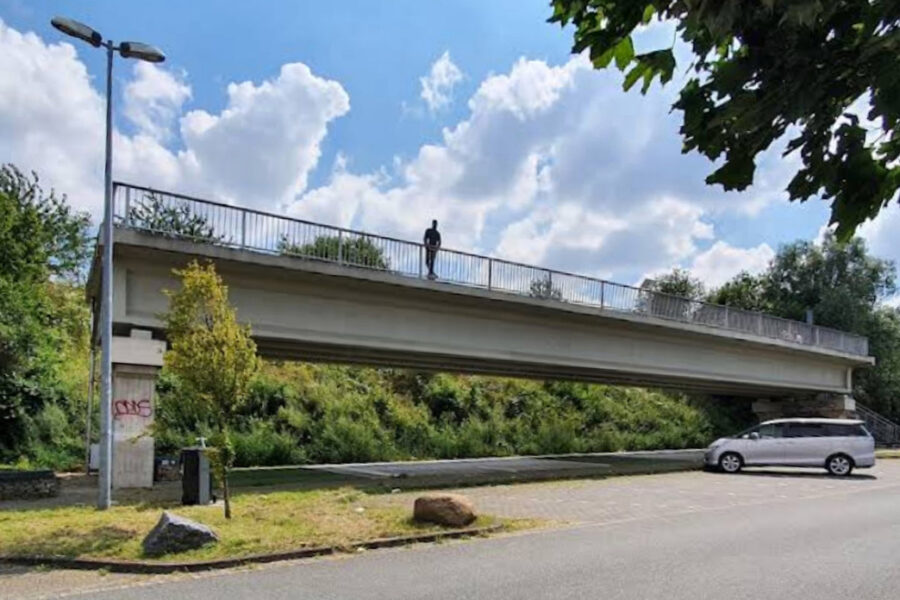
Overpass “Weg Hesseler” in Beckum
Former Motorway Overpass “Weg Hesseler” in Beckum
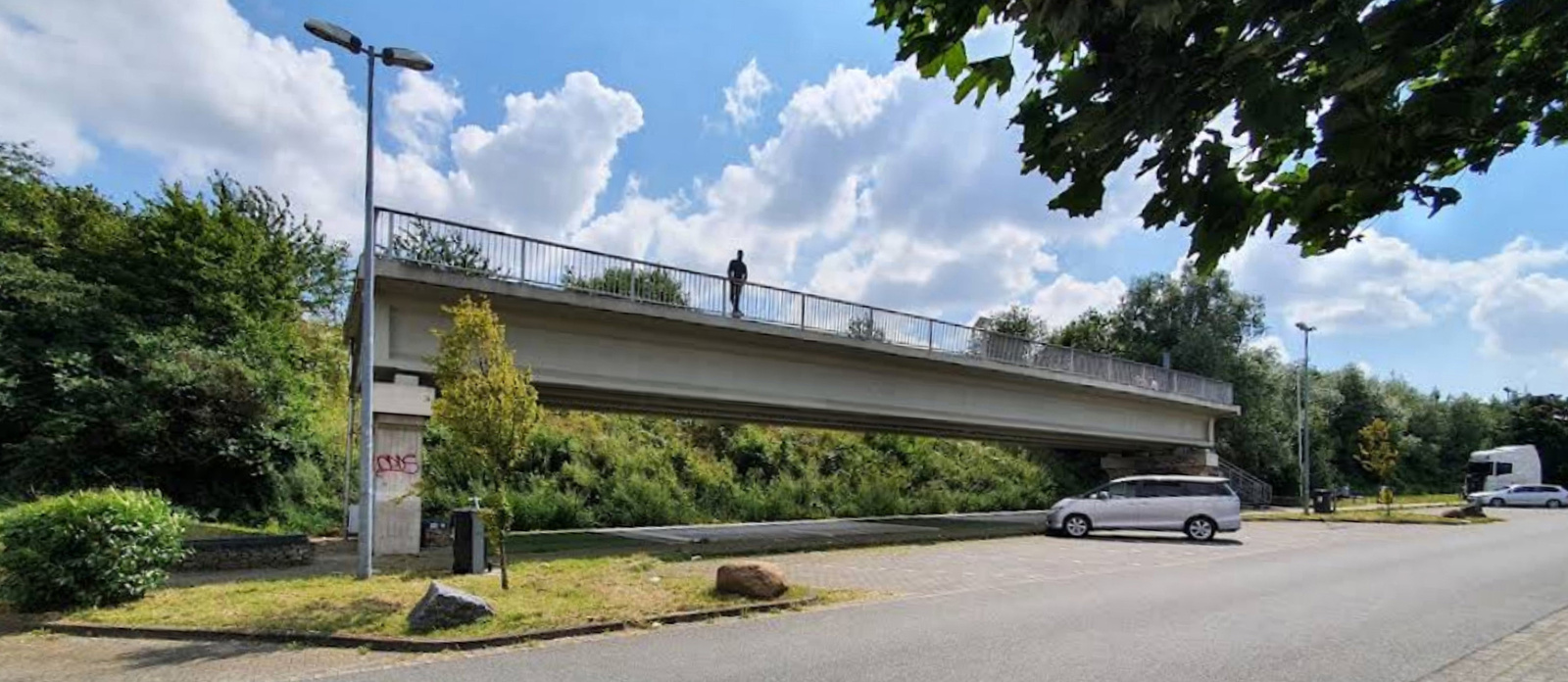
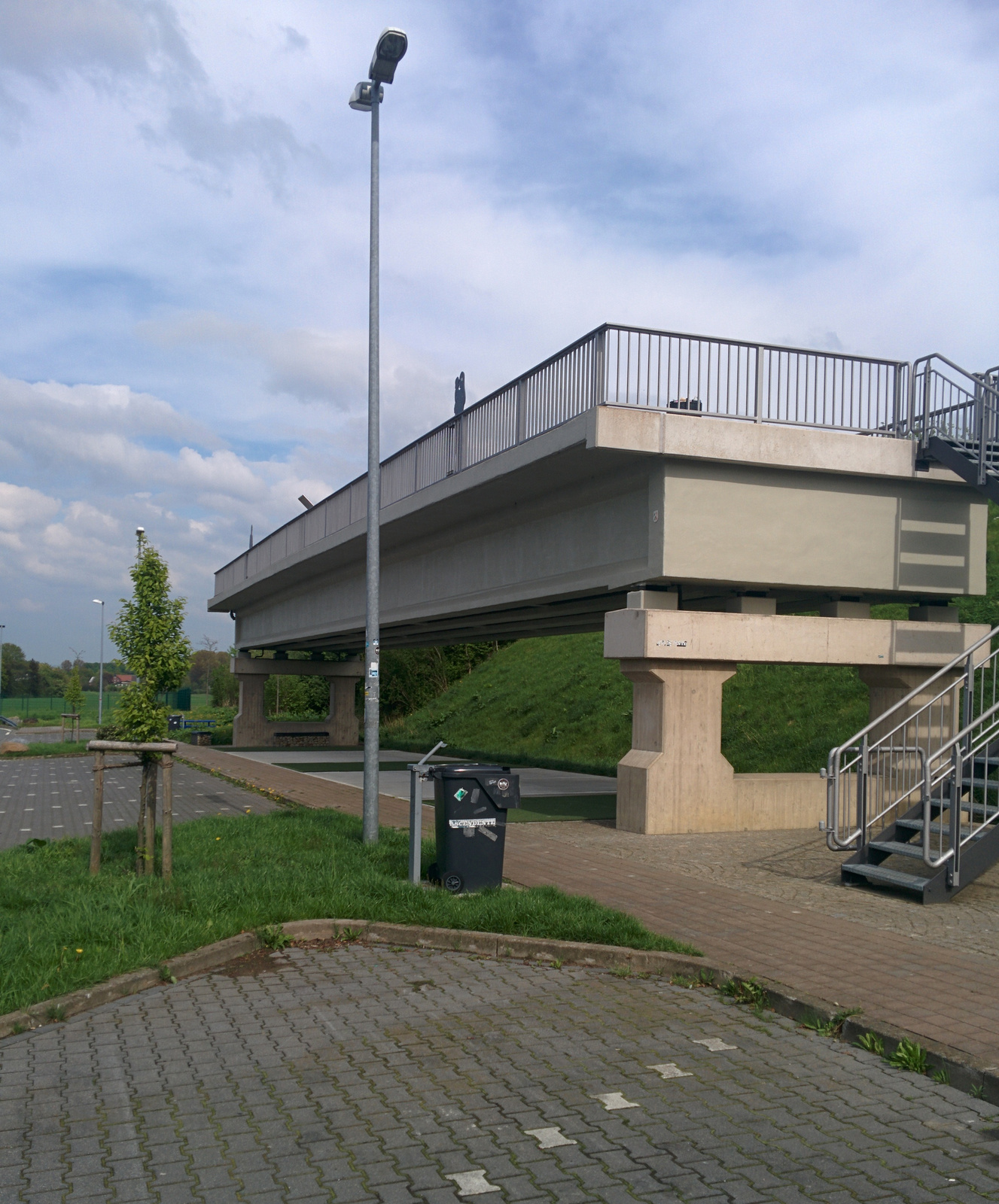
View from the north across the car park, photographed in 2021.
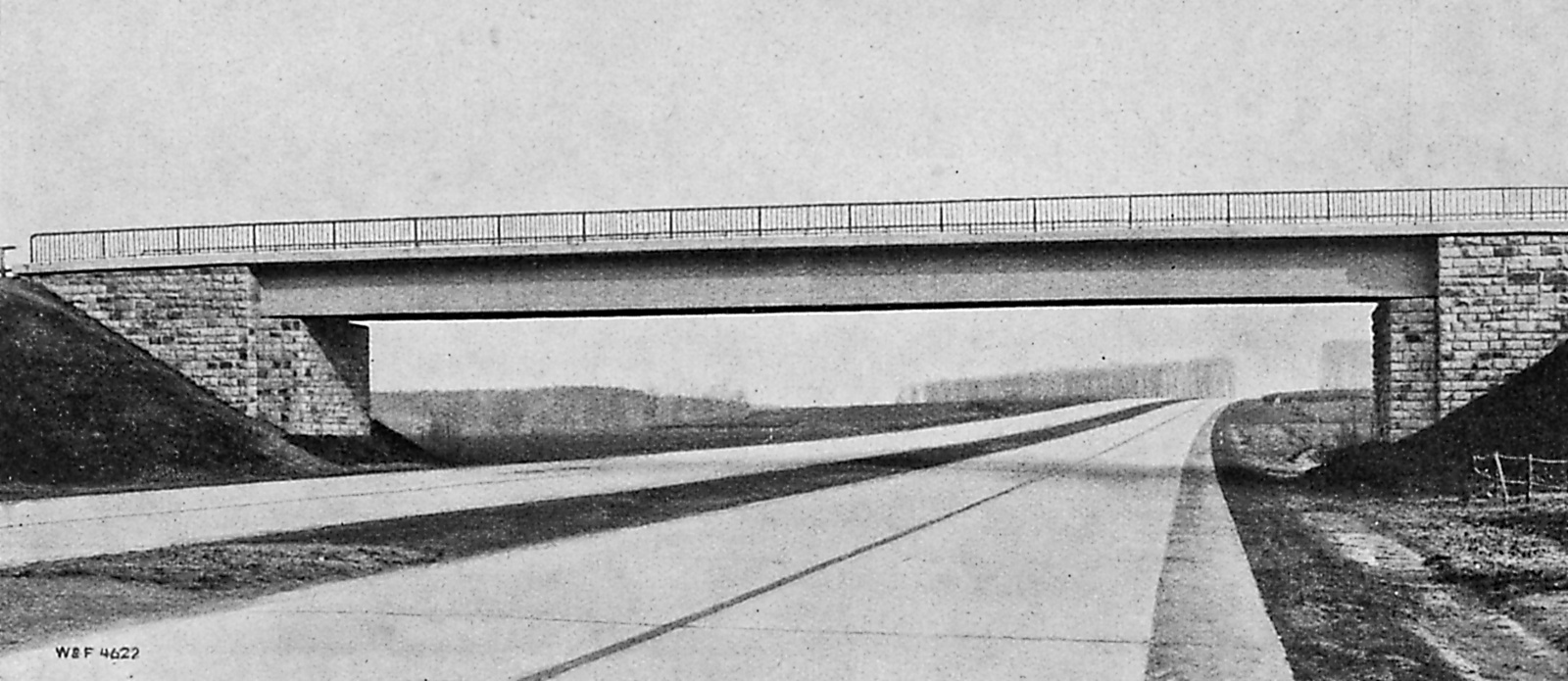
View from the southwest before the opening of the motorway section, photographed in 1938.
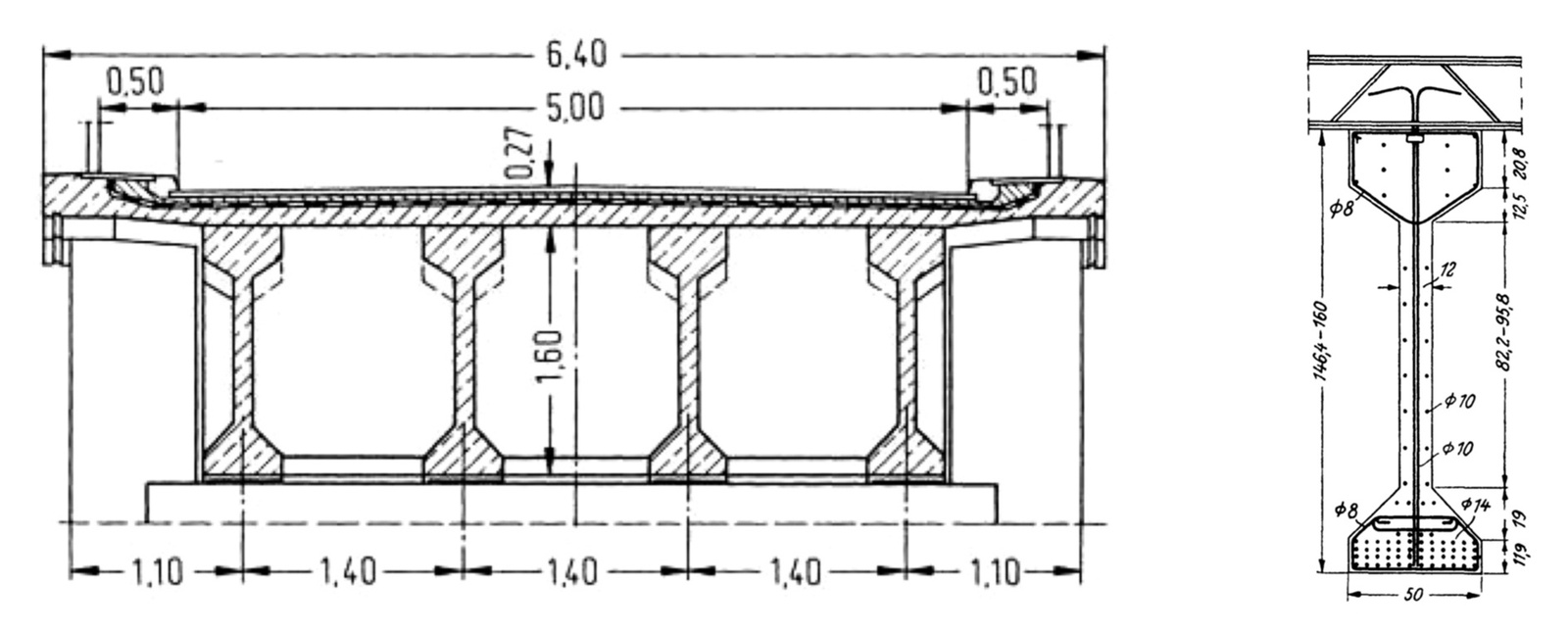
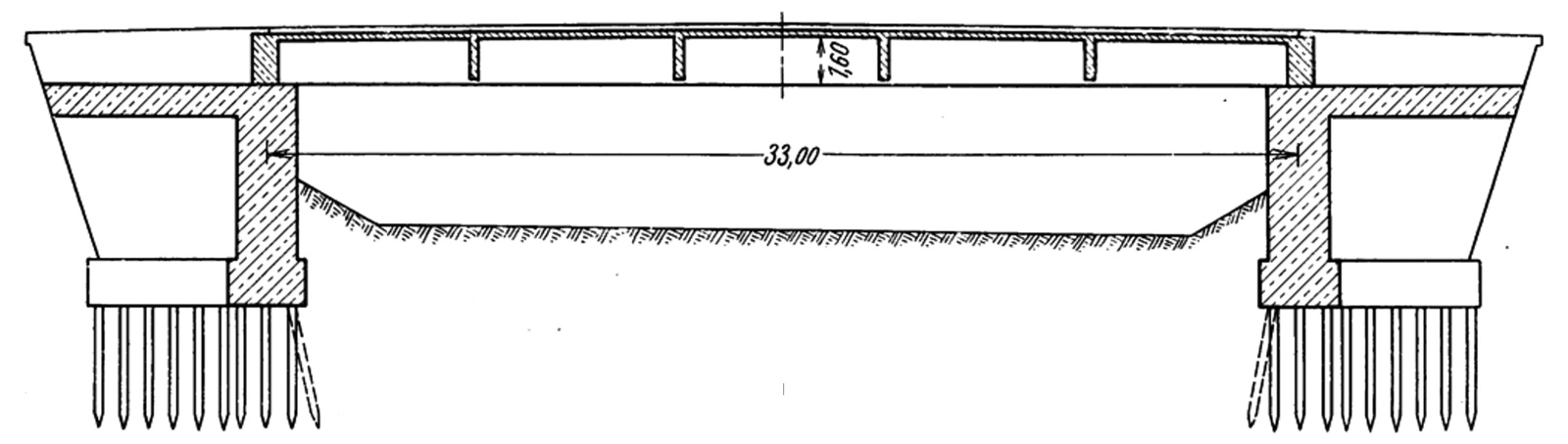
Longitudinal section at the original site.
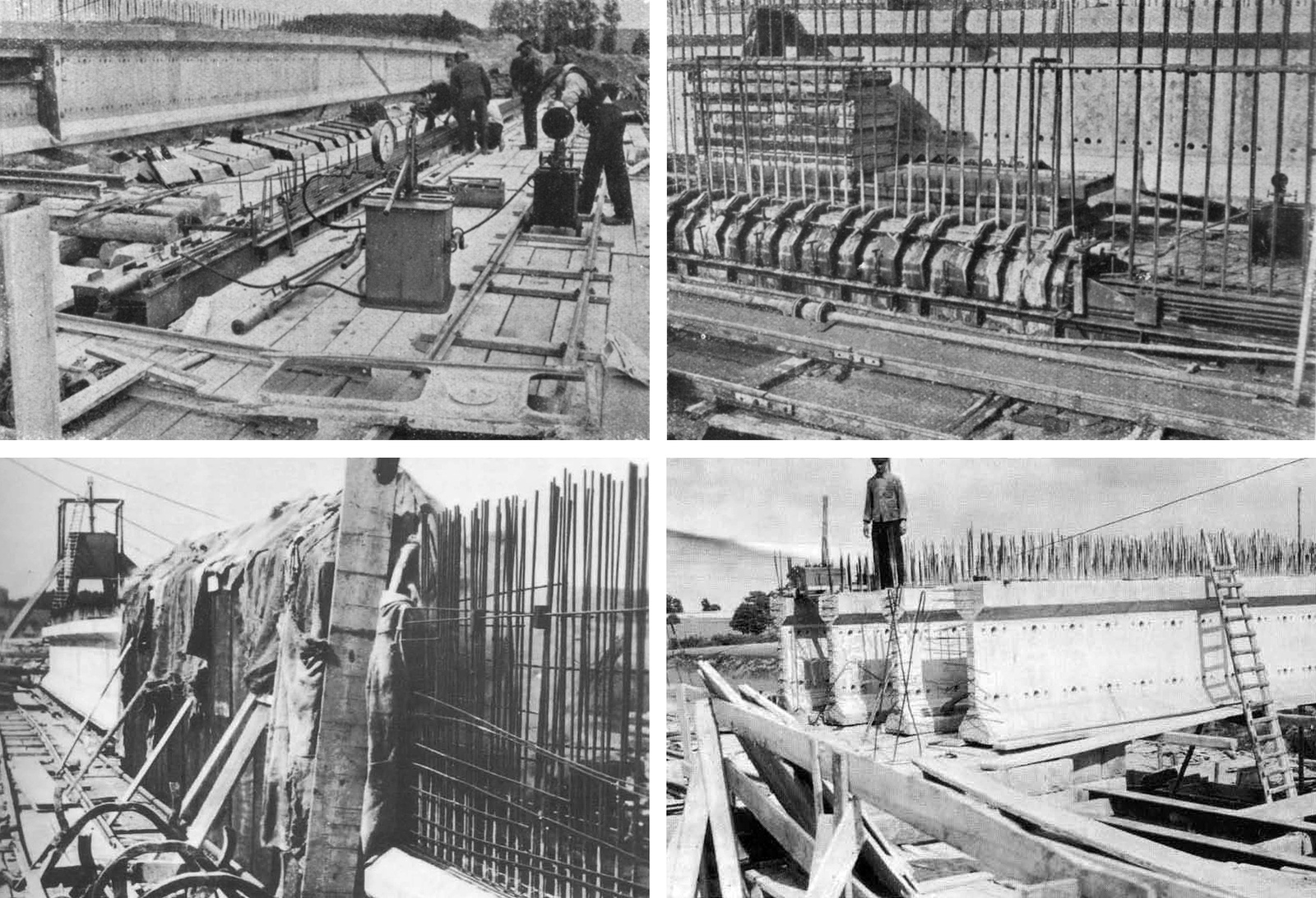
Stages in the production of the beams, summer 1938: a) tensioning of the steel bars in the bottom chord, with a finished beam in the background; b) cast-iron molds used as formwork for the bottom chord; c) casting a section of web and top chord – blankets prevent heat from escaping from the concrete in the cast-iron molds; d) the four finished prestressed concrete beams pushed into position.
A beam on the special transport vehicle after being lifted out of its original position.
The world’s first road bridge with bonded prestressing is internationally regarded as a milestone of high-modern civil engineering. Its relocation a few years ago raises complex questions about authenticity in the preservation of historic engineering structures.
The Building
In autumn 1933, shortly after seizing power, the National Socialists launched the construction of the Reichsautobahn network. The ideal of grade-separated junctions made overpasses defining design elements of this large-scale infrastructure project. For economic reasons, the unorthodox type of the two-span reinforced concrete beam bridge became established for this purpose. After a few years, however, the wish to dispense with central piers and the mandate to save steel led to a search for alternatives. One proposal came from the construction company Wayss & Freytag. It had acquired a license from Eugène Freyssinet, the French “father of prestressed concrete,” and had demonstrated the safety of his new construction method in extensive test series. The result, in 1938, was the world’s first road bridge with bonded prestressing.
The structure, almost 50 m long, with a superstructure 6.4 m wide and spanning 33 m, carried the agricultural traffic of the farmer Schulze-Hesseler over the motorway near Oelde. A cast-in-place deck slab connected four prestressed I-beams to form a T-beam whose slenderness was sensational compared with conventional reinforced concrete bridges. With its cantilevered deck, light railing and stone-clad abutments, the overpass nevertheless remained committed to the design canon for such structures developed largely by the architect Paul Bonatz.
Construction
The beams were produced using the method Freyssinet had developed shortly before. On site, 52 high-strength manganese steel bars were first heavily pretensioned and hooked in pairs into a steel base plate. The bottom chord was then cast using modular cast-steel formwork. Heated by steam to 80 °C, the highly compacted concrete could be stripped after only two hours. Web and top chord were then cast in sections; they accommodated a further 24 prestressing bars as well as stirrups, which were likewise prestressed. Finally, the prestressing force was transferred to the concrete and the finished beam was pushed into its final position.
With its precast prestressed concrete elements, the “Weg Hesseler” overpass combined high load-bearing capacity with low steel consumption in a way that pointed to the future. Although prestressed concrete was initially used mainly in military installations, the experience gained here laid the foundation for its triumph in post-war bridge construction.
Future
The epoch-making structure was long considered structurally safe and was retained when the motorway was widened in the early 2000s. In 2010, however, load restrictions made a replacement structure necessary. Owing to its significance for the history of construction, the superstructure was moved to a nearby rest area in an elaborate and highly controversial operation. Despite extensive didactic and artistic presentation, the measure cannot conceal its character as a makeshift solution and vividly demonstrates how difficult it is to preserve historic bridges authentically once they can no longer fulfill their original purpose.
Key Facts
Location: Raststätte Vellern (A 2 motorway), Müllerstraße 31, 59269 Beckum
Construction: 1938; relocated 2012
Repairs: 1963, 1967, 1969, 1988, 1998, 2013
Structural design and construction: Neue Baugesellschaft Wayss & Freytag AG, Frankfurt am Main / Düsseldorf (Director Kurt Lenk, Rudolf Oppermann, Gotthard Franz); consultant: Eugène Freyssinet
Design: Oberste Bauleitung der Reichsautobahnen (Reichsautobahn Construction Directorate), Essen
Heritage status: Entered in the list of historic monuments of the town of Beckum since 1991 under object no. A 102.
Further Reading
Neue Baugesellschaft Wayss & Freytag AG: “Erste Brücke aus Spannbeton über die Reichsautobahn.” In: Die Bauzeitung 36 (1939), no. 12, pp. 179–182.
Horst Metzler: “Eine frühe Spannbeton-Straßenbrücke nach dem Verfahren Freyssinet.” In: Wilhelm Buschmeyer (ed.): Betonbau in Forschung und Praxis. Festschrift zum 60. Geburtstag von György Iványi. Düsseldorf 1999, pp. 153–159.
